Infantry Rd, Canal Bank, Lahore.Pakistan

Walled City of Lahore: Discovering Restorations and Must-See Spots

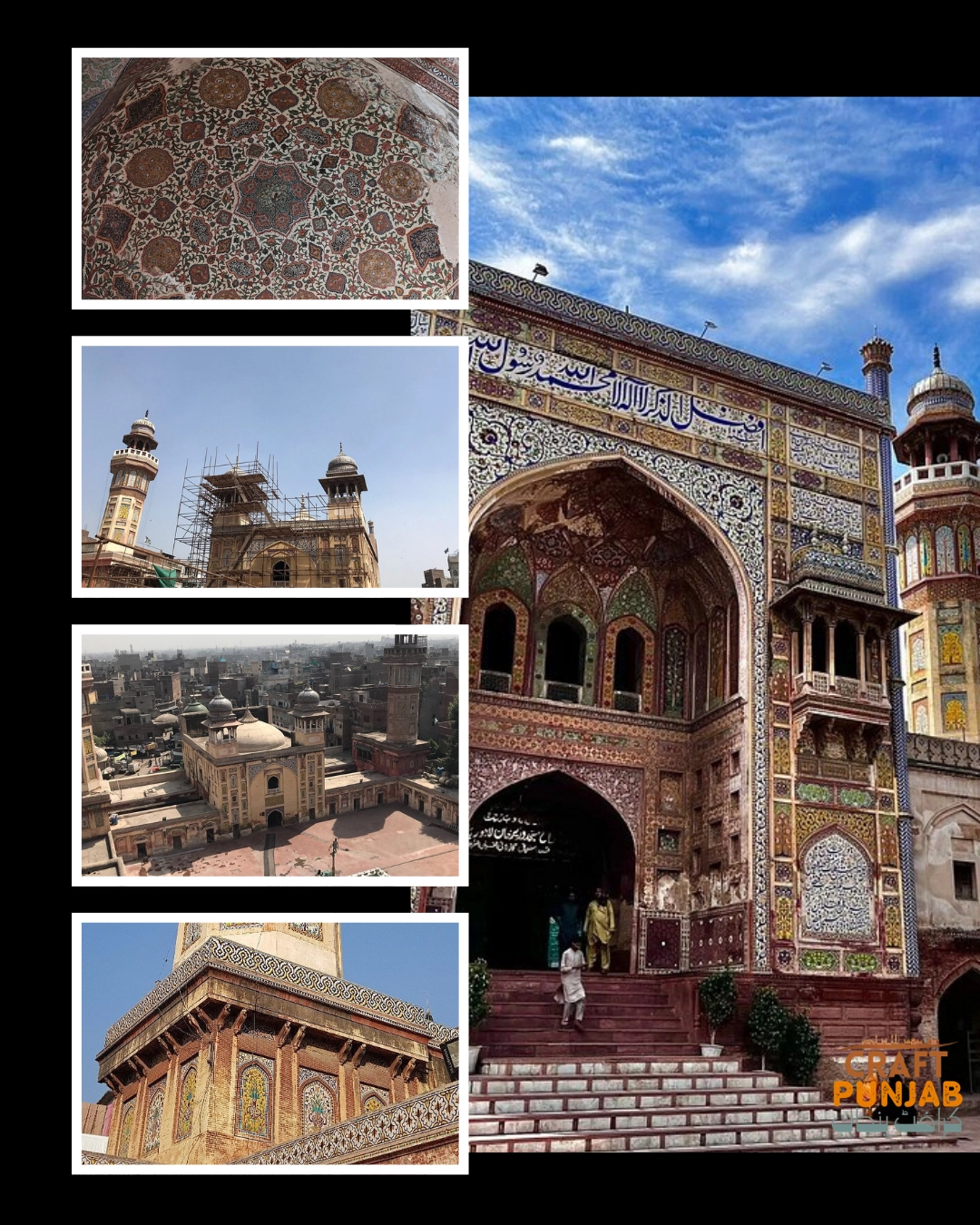
The Walled City of Lahore stands as the historic heart of Pakistan’s cultural capital, and ongoing conservation efforts are breathing new life into this vibrant area. In January 2026, three beautifully restored monuments at Lahore Fort were revealed to the public. By April 2026, restoration work at the Wazir Khan Mosque—often hailed as one of the most intricately adorned Mughal-era mosques—was still in progress. This guide will walk you through who’s behind these efforts, what’s been completed, and how to plan your visit.
What is the Walled City of Lahore?
The Walled City is the ancient core of Lahore, covering around 260 hectares and showcasing many structures from the 16th and 17th centuries. Unfortunately, much of it suffered damage from arson and looting during the Partition of 1947. Key landmarks include the UNESCO World Heritage Site, Lahore Fort, and the stunning Wazir Khan Mosque.
Who is restoring it?
The restoration efforts are spearheaded by two main organizations. The Walled City of Lahore Authority (WCLA), established in 2012, aims to revive the city’s Mughal heritage and draw in visitors. Collaborating with it is the Aga Khan Cultural Service – Pakistan (AKCS-P), which employs traditional conservation methods. Previous phases of restoration were managed by the Aga Khan Trust for Culture, in partnership with the Government of the Punjab, and supported by international donors, including contributions from the United States for specific projects.
What was restored in 2026?
Lahore Fort: three monuments unveiled in January
In January 2026, Lahore Fort saw the unveiling of three significant monuments: the Sikh-era Hammam, the Athdara Pavilion, and the Loh Temple. This restoration project, led by AKCS-P in collaboration with the WCLA, marked a major milestone in conservation efforts. The hammam, located in the northeast corner of the Sheesh Mahal Quadrangle, was originally constructed during Shah Jahan’s reign and later transformed into a bathhouse during the Sikh period. During the unveiling, a speaker highlighted that some of the fort’s most stunning frescoes can be found within this hammam. Right next to it, the Athdara Pavilion served as the court of Maharaja Ranjit Singh.
Wazir Khan Mosque: work continuing in April
Fast forward to April 2026, and key stakeholders gathered to assess the ongoing work at Lahore Fort, the Wazir Khan Mosque, and Akbari Mandi. At the mosque, efforts are focused on reinforcing the domes, walls, and foundations, along with repairing the floors, lime plaster, rooftops, and parapets. The surrounding neighborhood has also seen a revival, with historic homes along the southern side of Chowk Wazir Khan being restored. The goal is to transform the mosque and its square into a vibrant tourist destination and community space.
Wazir Khan Baradari: scheduled for mid-2026
Looking ahead, the conservation of the Wazir Khan Baradari, which kicked off in 2024, is on track for completion by 2026. Be sure to check the WCLA for updates before planning your visit.
Why the Wazir Khan Mosque matters
So, why is the Wazir Khan Mosque so important? Built between 1634 and 1641 during Shah Jahan’s reign, it was commissioned by the court physician Ilm-ud-din Ansari, better known as Wazir Khan, who later became the viceroy of Punjab. The mosque is famous for its kashi-kari, a unique style of faience tilework, and its interiors are almost entirely adorned with exquisite Mughal-era frescoes. It was constructed to enclose the tomb of the Sufi saint Miran Badshah, which still rests in the courtyard. The mosque was part of a larger complex that included a row of shops traditionally occupied by calligraphers and bookbinders, along with the square right in front of its main entrance.
The Shahi Hammam and the Royal Trail
Nestled near the mosque, the Shahi Hammam stands as the last surviving Mughal-era bathhouse in Lahore. Its restoration earned a UNESCO Award of Merit in 2016, a testament to its historical significance. Meanwhile, the Royal Trail, also known as the Shahi Guzargah, is a beautifully restored 383-meter heritage path that stretches from Delhi Gate to the bustling Chowk Purani Kotwali market area. This revitalization not only enhanced the aesthetics but also upgraded underground utilities, paving, and street furniture.
A tale of craftsmanship and architecture
The conservation efforts here celebrate the traditional crafts that have been integral to the mosque since its inception, including the stunning kashi-kari tilework, intricate frescoes, and elegant calligraphy, alongside the lime plaster repairs mentioned earlier. The AKCS-P emphasizes the use of traditional techniques in its restoration work. The historic row of calligraphers’ and bookbinders’ shops within the mosque complex serves as a poignant reminder of the craftsmanship that has always been a part of this site.
What challenges lie ahead?
Funding has posed a significant challenge. A few years back, Arab News highlighted that eight years after the establishment of the WCLA, only the Wazir Khan Mosque, the Shahi Hammam, and a small section of Lahore Fort had undergone renovations due to financial constraints. While the upcoming unveilings at Lahore Fort in 2026 indicate progress, much of the Walled City still awaits the conservation it desperately needs.
Visiting the Walled City
Getting there: The easiest way to reach the Wazir Khan Mosque is through Delhi Gate.
Check before you go: Since restoration work might restrict access to certain areas, it’s a good idea to verify the current opening hours and entry regulations with the Walled City of Lahore Authority.
Respect the setting: Remember, the Wazir Khan Mosque is a sacred place. Dress modestly and adhere to local customs.
Frequently asked questions
- What is the Walled City of Lahore?
It’s the historic heart of Lahore, spanning about 260 hectares, and is home to stunning Mughal-era monuments like the Wazir Khan Mosque and the Shahi Hammam. - Who is restoring the Wazir Khan Mosque?
The restoration is a collaborative effort between the Walled City of Lahore Authority and the Aga Khan Cultural Service – Pakistan. Previously, the Aga Khan Trust for Culture worked alongside the Government of the Punjab and the World Bank on conservation efforts. - When was the Wazir Khan Mosque built?
It was constructed between 1634 and 1641 during the reign of Mughal emperor Shah Jahan. - What was unveiled at Lahore Fort in 2026?
In January 2026, the Sikh-era Hammam, the Athdara Pavilion, and the Loh Temple were unveiled. - Can tourists visit?
Officials see tourism as a key part of the restoration efforts. Be sure to check the Walled City of Lahore Authority for the latest access and opening times.
Explore more
The Wazir Khan Mosque was built during Shah Jahan’s era. You can admire the artistry of his court in our Fine Art Prints collection, featuring reproductions of Mughal court paintings, each credited to its respective museum source.
Sources
- Dawn, “Three restored historical monuments unveiled at Lahore Fort,” January 26, 2026: https://www.dawn.com/news/1969116
- The Express Tribune, “Restoring Lahore’s timeless beauty,” April 11, 2026: https://tribune.com.pk/story/2602100/restoring-lahores-timeless-beauty
- Aga Khan Development Network, “The Walled City of Lahore: Preserving heritage and catalysing renewal”: https://the.akdn/en/resources-media/whats-new/spotlights/walled-city-lahore-preserving-heritage-and-catalysing-renewal
- Aga Khan Development Network, “Walled City of Lahore conservation”: https://the.akdn/en/where-we-work/south-asia/pakistan/walled-city-of-lahore-conservation-pakistan
- Auqaf and Religious Affairs Department, Government of the Punjab, “Wazir Khan Mosque”: https://auqaf.punjab.gov.pk/node/109
- Arab News, “For walled city in ancient metropolis of Lahore, fading hope for return to former glory”: https://www.arabnews.com/node/1870871
- Wikipedia, “Shahi Hammam”: https://en.wikipedia.org/wiki/Shahi_Hammam
- Wikipedia, “Wazir Khan Baradari”: https://en.wikipedia.org/wiki/Wazir_Khan_Baradari